Suppression Equipment
Manufacturers of apparatus, pumps, retardant systems, and suppression hardware sold into districts and agencies with structured procurement.
Districts, agencies, and facility owners are evaluating risk on a compressed timeline, often during a season that has already started. The site has to answer them at speed.
The evaluation is different at every level. The site should be too.
Manufacturers of apparatus, pumps, retardant systems, and suppression hardware sold into districts and agencies with structured procurement.
Wildfire mitigation and defensible space operators whose work is bought by utilities, municipalities, and private landowners at very different scales.
Fuels reduction, thinning, and vegetation management crews competing for agency and utility program work.
Response and standby services where availability, coverage area, and mobilization time are the product being sold.
Vendors supplying fire districts and departments through purchasing processes that reward being easy to evaluate and easy to procure from.
Aerial suppression and support operators with fleet, certification, and dispatch detail that rarely makes it onto the public site.
Sensing, camera, and early-detection systems sold to agencies and utilities running formal technical evaluations.
Structure protection and facility readiness services bought by insurers, risk managers, and owners of high-value sites.
None of them are browsing. Each arrives with a specific question and a limited amount of patience, and most will never tell you they visited.
A site that answers all seven quickly is doing commercial work. A site that answers none of them is quietly removing you from consideration.
Whether the equipment or service fits their operation and their budget cycle.
Registration, contract vehicles, and whether you can be bought through an existing path.
Defensible evidence that engaging you measurably reduces exposure.
Whether your work is credible enough to influence a risk assessment.
Crew capacity, coverage, and safety record against a large recurring program.
A vendor that will survive public scrutiny and a council review.
Plain answers about what happens on their property, and what it costs.
Drag each comparison. Nothing about these businesses changed except how clearly they present.
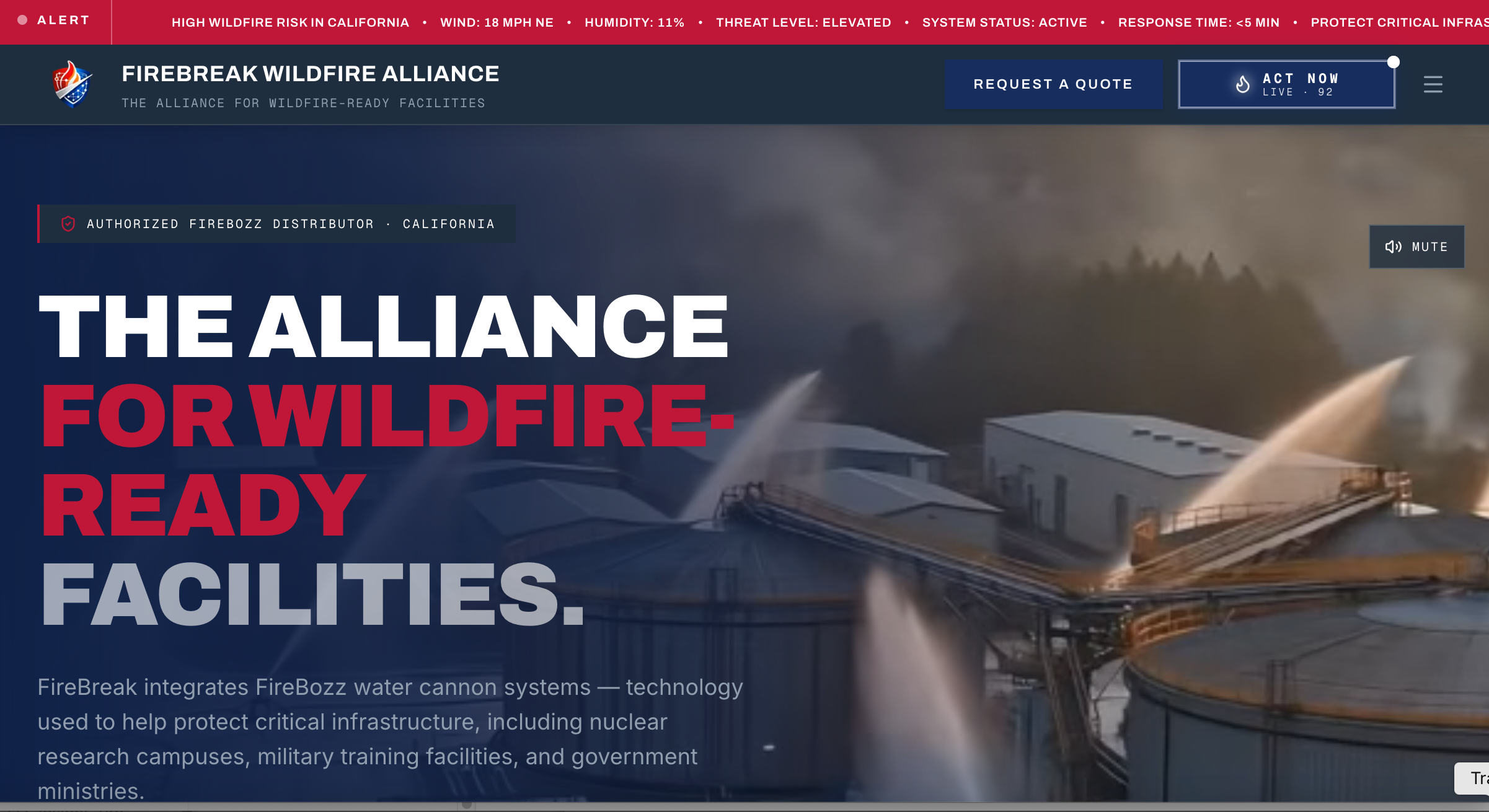
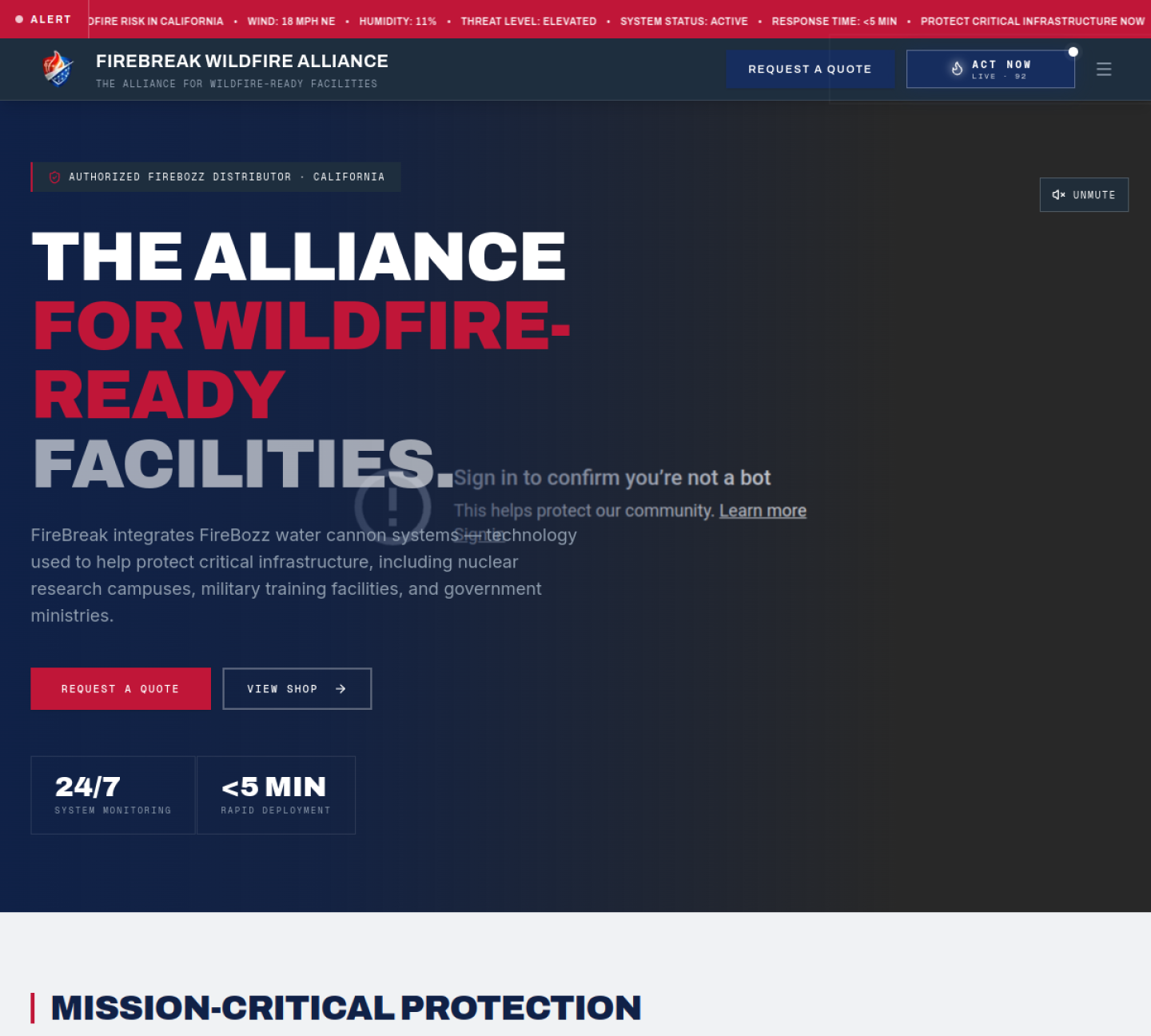
Alliance site built around wildfire-ready facilities, with suppression capability and response pathways made legible at a glance.
Most sites in this sector carry two or three of these. The gap is the opportunity.
Exactly what you do and, just as importantly, what you do not. Ambiguity here wastes both parties' time during an active season.
Geography served and how far you will mobilize, stated concretely rather than as a claim about nationwide availability.
Apparatus, engines, aircraft, or hardware inventory with the specifications an operations officer would ask for on a call.
NWCG qualifications, ICS familiarity, crew typing, and certifications carried by personnel, presented without inflation.
Relevant NFPA and agency standards your equipment or service is built against, with the specific standard number cited.
Agency registration, cooperative contracts, and purchasing vehicles that let a district buy without inventing a new process.
Releasable incident and program history that demonstrates the operation has performed under real conditions.
How safety is managed and documented. For utility and agency programs this is frequently a gating question.
A direct route to reach someone who can commit resources — with urgency handled differently from a general inquiry.
Qualification and typing claims are published as your operations lead supplies them. We build the presentation; the credentials remain yours to verify.
We'll review it the way your buyer would — and tell you exactly what we'd change.